After November 5th...
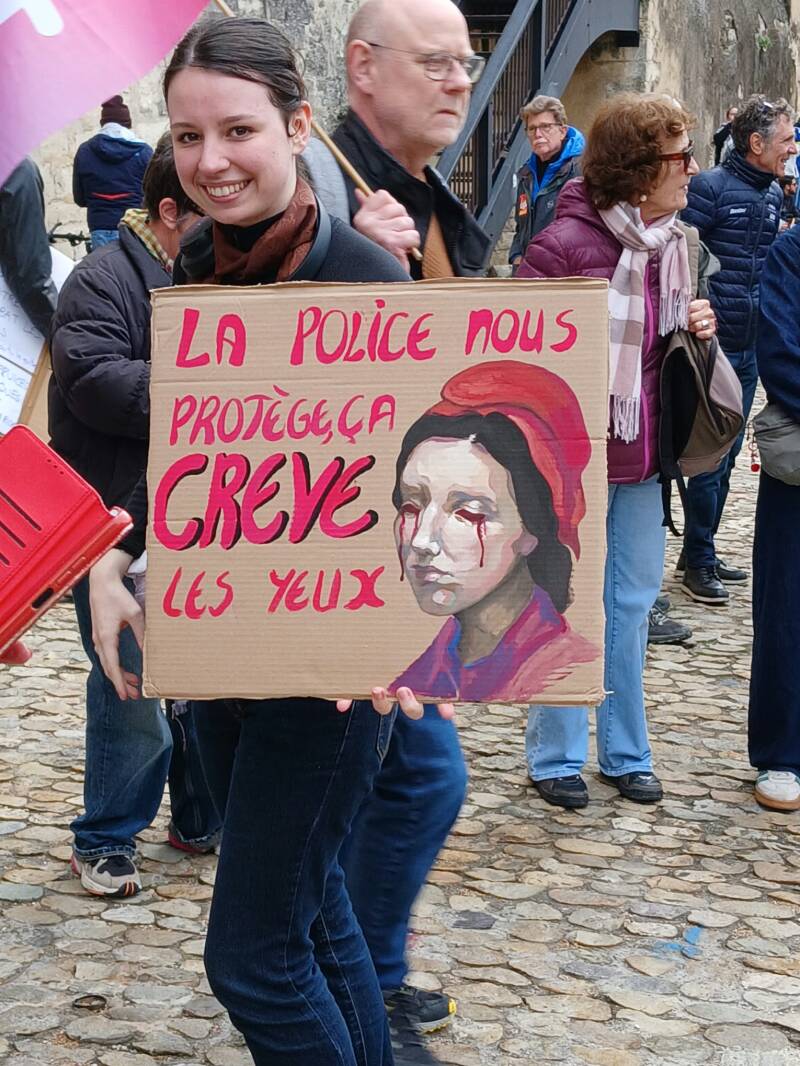
General Strike, Avignon 05.11.2026
La police nous protège, ça greve les yeux
The police protect us, it's blindingly obvious.
Photo: Jean-Claude Krembser
The master's tools will never dismantle the master's house.
Audre Lorde
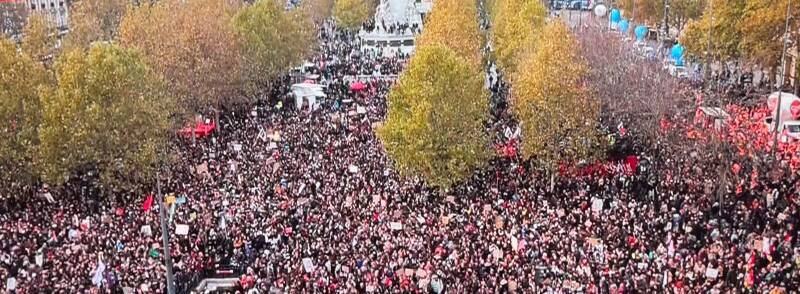
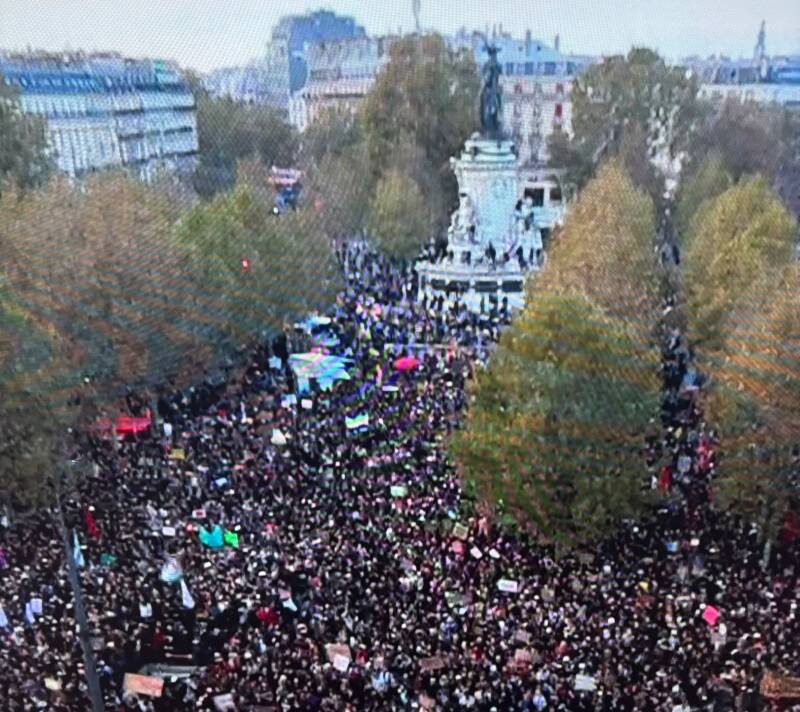
General Strike, Paris, 05.11.2026
UK denies entry to Swedish academic, Andreas Malm, due to speak at Palestine event
The freedom to demonstrate is what makes the difference between a democracy and a dictatorship.
Sophie Binet, General Secretary of the CGT
Treaty on the Prohibition of Nuclear Weapons: France must take responsibility
PUBLISHED ON NOVEMBER 4, 2026
READING TIME: 2 MIN.
From November 30 to December 4, 2026, the first Review Conference of the Treaty on the Prohibition of Nuclear Weapons (TPNW) will be held at the United Nations headquarters in New York. On this occasion, the CGT (General Confederation of Labour) calls on the President of the Republic to take a further step towards the elimination of nuclear weapons.
Adopted on July 7, 2017, and entering into force on January 22, 2021, the Treaty on the Prohibition of Nuclear Weapons (TPNW) represents a significant step forward in international law in favor of nuclear disarmament. It affirms that no lasting security can be based on the threat of mass destruction of populations. Nuclear weapons pose an unacceptable risk to humanity, with catastrophic humanitarian, environmental, and health consequences.
As international tensions worsen, armed conflicts multiply and rearmament strategies take an increasing place in public policies, the CGT reaffirms its commitment to peace, disarmament and cooperation between peoples.
France cannot sustainably defend multilateralism and respect for international law while refusing to participate in the process led by the TIAN.
Therefore, the CGT asks the President of the Republic to take a further step by participating in international work relating to the treaty, by engaging in dialogue with the States Parties, by opening the debate on France's accession to the TIAN, and by participating as an observer in this first review conference.
The CGT reiterates that the issue of nuclear disarmament is also an economic and social one. The considerable resources devoted to nuclear arsenals and their modernization are resources that are not being used to meet the needs of the population. In a context marked by difficulties in accessing healthcare, educational needs, climate emergencies, precariousness, and inequality, budgetary choices must be the subject of genuine democratic debate. France does not need advanced nuclear deterrence as announced by President Macron, but rather the implementation of its commitments to military nuclear non-proliferation and a response commensurate with essential social and environmental needs.
True to its internationalist commitments and its fight for solidarity among peoples, the CGT believes that peace is an essential condition for social progress. For peace, solidarity among peoples, and a world without nuclear weapons, France must commit to signing the Treaty on the Prohibition of Nuclear Weapons (TPNW).
In Montreuil, on November 4, 2026
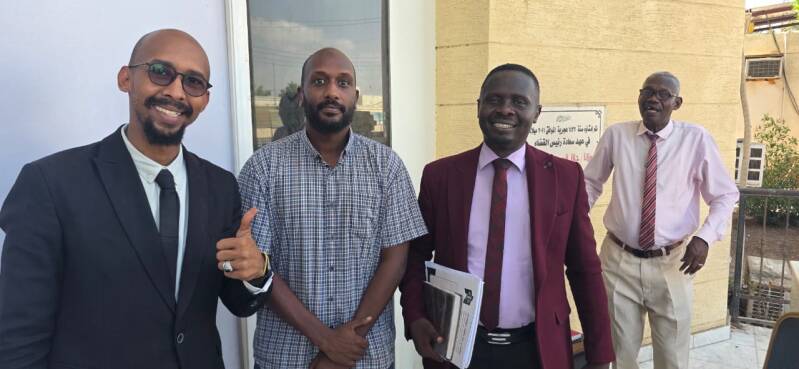
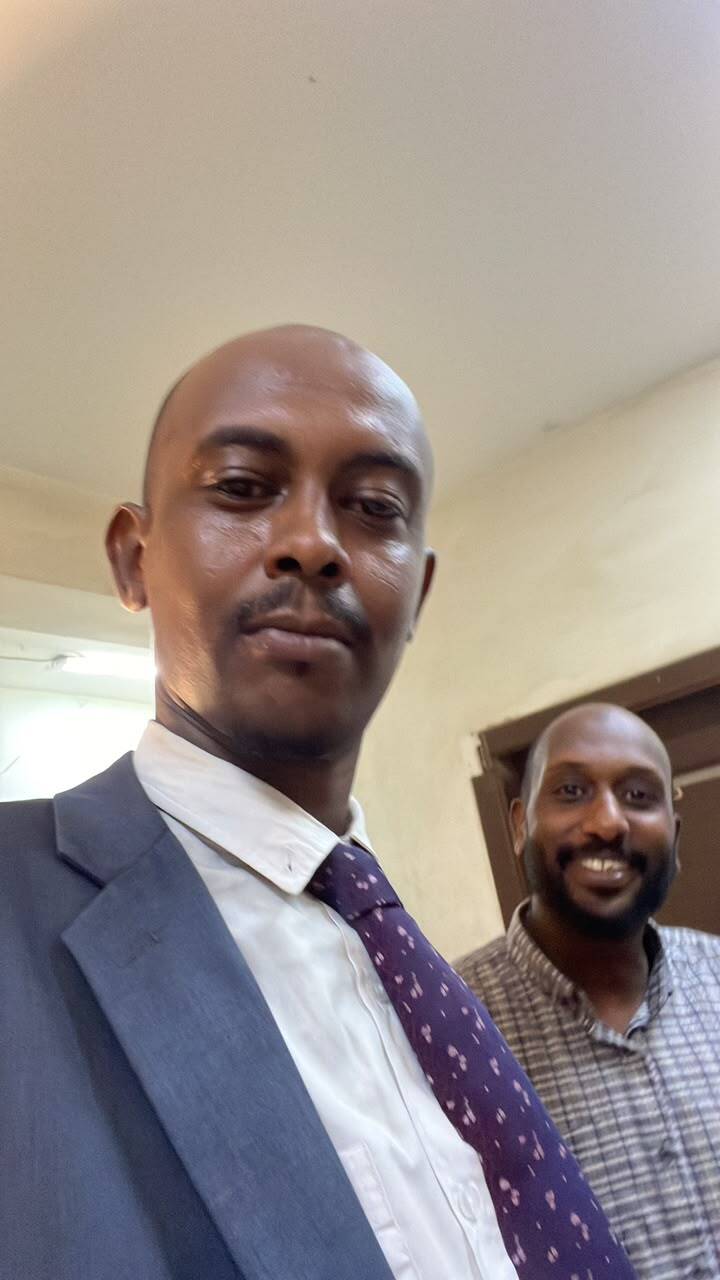
Friends of Mohamed Ezzeldin: Statement on the Release of Mohamed Ezzeldin
A Victory for Justice, A Continuing Commitment to Human Rights
3 November 2026
Friends of Mohamed Ezzeldin is pleased to announce the release of Sudanese lawyer and human rights defender Mohamed Ezzeldin, following the dismissal of all charges brought against him before the Special Court dealing with terrorism cases at the Criminal Courts Complex in Port Sudan, Red Sea State.
On Tuesday, 20 October 2026, the Court dismissed the charges against Mohamed for lack of evidence, pursuant to Article 141 of the Criminal Procedures Act, after completing its examination of prosecution witnesses.
Mohamed was released following the ruling. The statutory period available to the prosecution to appeal the decision expired on Tuesday, 3 November 2026. We understand that no appeal was lodged within this period and that the proceedings against him have therefore concluded.
This welcome outcome brings to an end an ordeal of more than seventeen months of detention, separation from his family, and prolonged uncertainty over his liberty and future.
Our Gratitude to All Who Stood with Mohamed
We extend our heartfelt appreciation to everyone who initiated, organised, contributed to and supported the campaign for Mohamed's freedom.
Our particular gratitude goes to the Sudanese lawyers, human rights defenders and civil society activists who first raised the alarm following Mohamed's arrest in May 2025 and worked tirelessly to secure his release.
We especially acknowledge the efforts of Sudan Emergency Lawyers, Africa Justice and other organisations and individuals who sustained the campaign under exceptionally difficult circumstances.
Many of these courageous individuals continued their work amid the dangers, restrictions and insecurity created by Sudan's devastating civil war, often at considerable personal risk. Their determination deserves particular recognition.
We also thank the international human rights organisations, legal professionals, campaign volunteers, donors, friends and supporters who helped bring Mohamed's plight to public attention.
We acknowledge with appreciation the intervention of the United Nations Special Rapporteur on the situation of human rights defenders, whose public expression of concern helped draw international attention to the case and the serious questions surrounding Mohamed's detention and prosecution.
The solidarity shown throughout this campaign has demonstrated the importance of collective action in defending fundamental rights and ensuring that those facing injustice are not forgotten.
Mohamed Is Free, but Our Responsibility Continues
While we celebrate Mohamed's release and the dismissal of the charges against him, we recognise that the consequences of his prolonged detention will not disappear overnight.
Mohamed and his family have endured an exceptionally difficult period. Rebuilding their lives, restoring their security and stability, and overcoming the personal and material consequences of this ordeal will require continued support.
Friends of Mohamed Ezzeldin was established to campaign for justice for Mohamed and to support him and his family throughout his detention.
Our immediate objective has now been achieved. Our responsibility, however, continues.
We remain committed to supporting Mohamed as he rebuilds his life, to seeking assurances against further harassment or arbitrary arrest, and to helping him and his family regain the security and stability they deserve.
Freedom for Mohamed Must Strengthen Our Concern for Others
Mohamed's release is also an occasion to remember the many others who remain deprived of their liberty in Sudan.
Hundreds of civilians, humanitarian volunteers, lawyers, human rights defenders and community activists are reported to remain detained in prisons and other detention facilities across the country, under the control of both parties to the ongoing civil war.
Many face allegations of arbitrary detention, prolonged imprisonment without adequate judicial safeguards, ill-treatment and restrictions on access to legal representation.
These individuals, like Mohamed, have families waiting for news of their safety and hoping for their return.
The suffering of detainees and their families must not disappear from public attention simply because individual cases have reached a favourable outcome.
We therefore reaffirm our commitment to defending the fundamental rights of all civilians detained unlawfully or arbitrarily, irrespective of which party to the conflict holds them.
We call upon all parties exercising control over places of detention in Sudan to respect their obligations under international human rights and humanitarian law, protect detainees from torture and ill-treatment, guarantee access to appropriate legal procedures, and release those held without lawful grounds.
We also encourage Sudanese civil society organisations, professional associations, humanitarian groups and international human rights bodies to sustain their attention to the plight of detainees throughout the country.
Our Commitment Going Forward
The campaign for Mohamed Ezzeldin has demonstrated the value of solidarity across national borders and professional and community networks.
We hope the relationships established through this campaign will continue to support Mohamed and his family and contribute to wider efforts to defend those whose rights and liberties remain under threat.
We thank every individual and organisation whose efforts helped bring us to this moment.
We share Mohamed's freedom with all who stood beside him throughout his ordeal, and we extend our solidarity to those who are still waiting for justice.
Mohamed Ezzeldin is free. Our commitment to justice and human dignity continues.
Friends of Mohamed Ezzeldin
3 November 2026
The CGT calls for a general strike on 5th November 2026 in France
During the meeting between the Prime Minister and labor unions on October 21st at Matignon, Sophie Binet strongly criticised the government for its failure to address the social unrest. Faced with the government's refusal to listen to the demands, the CGT is calling for a general strike on November 5th to force through alternative social policies.
Below we publish a speech by Sophie Binet, leader of the CGT
(Translated from French into English)
Why wait until the country is in flames before finally meeting with the trade unions at Matignon?
For 13 months, we have been warning you about an unprecedented surge in layoffs and calling for a national conference on the industrial sector.
To no avail. The result: our country is seeing more layoffs than ever before—surpassing even the levels seen after the 2008 financial crisis—and we are witnessing social tragedies that could have been averted had we been listened to (such as those at Fonderies de Bretagne, Fibre Excellence, etc.).
For 9 months, we have been warning you about the skyrocketing cost of living and requesting a roundtable discussion to implement emergency measures.
To no avail. The result: an unprecedented decline in living standards for workers, fueling massive protests against the high cost of living.
For 4 months, we have been warning you about the decay of our public services and our country’s lack of preparation for heatwaves.
To no avail. The result: 8,300 deaths, 100,000 hectares lost to fire, 25,000 people left in the wake of disaster, and workers left without protection against the heat this summer. This harrowing summer is weighing heavily on the national mood as we head into the new season—even though these catastrophes could have been prevented.
If all these warnings had been heeded, our country would not be in this state today.
Let me clarify the agenda right away: the issue is not how we organise our demonstrations. We know how to ensure our demonstrations are secure—your Minister of the Interior can, in fact, attest to that. The problem is that you do not respond to a social movement with repression.
What happened on Saturday is the result of 10 years of forcing policies through, 10 years of contempt toward young people and workers. Many tell us: "We’ve signed petitions, we’ve gone on strike, we’ve taken to the streets—yet we are never heard; nothing is left but violence." Our position is clear and consistent, and we did not need Emmanuel Macron’s unacceptable ultimatum to state it. The CGT consistently calls for peaceful mobilisation and firmly dissociates itself from acts of destruction and violence, which are always counterproductive for workers. Such actions cause our demands to be sidelined, destroy our workplaces and public services, and are directed against other workers—to whom we, in fact, offer our support.
No security measure can replace political solutions.
Why refuse to meet with the young people alongside us? Why refuse to meet with them this week? Why ask us to talk about them... without them? The very people most affected are missing from this table!
I welcome the fact that you have finally announced they will be received next week, but I must point out that—just as has been the case for the past month—you are, as always, behind the curve and out of touch. Their demands must be addressed now, in order to calm the country and avoid another Saturday of high tension. We need initial announcements that show they are being heard and that a process of negotiation is beginning. Mr. Lecornu, you must meet with them this week—to show them respect and give them then consideration they deserve.
Ultimately, the problem lies in your approach to maintaining public order: we are concerned about the widening gulf between the police and the public. Our republican police force has never been more fragile. Hundreds of thousands of young people and workers harbour a deep distrust toward it—and with good reason! One only has to look at how they have been treated over the past month. Never before has a student mobilisation been handled in such a way: mass detentions, with thousands of young people spending the night in police stations, and 250 youths injured by law enforcement—some very severely. It is deeply troubling that the government has not uttered a single word for these young people or their families. Furthermore, two deaths occurred during the demonstrations on October 17 and 18; these incidents must be fully investigated and brought to light.
Some of our activists have been injured: last Saturday in Toulouse, the inter-union contingent at the front—clearly identifiable behind their banner—was targeted by a sting-ball grenade, which wounded four female union leaders who have since filed formal complaints. Some of our activists were taken into police custody while wearing CGT vests, even as they were attempting to intervene between motorists and children. I am therefore issuing a solemn warning: there must be an immediate de-escalation and a radical shift in the strategy for maintaining public order, in order to prevent tragedies!
I also wish to express our great surprise at hearing—even from the very highest levels of the State—the claim that the violence on Saturday was the work of the "ultra-left." Investigations are underway, and the judicial system is involved; what evidence do you have to support such an assertion? Why not allow the justice system to carry out its work without interference?
We made the decision to be present to help ensure security during the demonstrations on October 6, 8, and 13, which helped them proceed smoothly. For October 24, we will issue the same directives: wherever possible, plan straightforward and secure routes, and ensure our presence by wearing red vests. We are counting on the prefects and law enforcement to ensure that these demonstrations take place peacefully.
We made the choice to be present to ensure the safety of the demonstrations on October 6, 8, and 13, which helped them proceed smoothly. For October 24, we will issue the same directives: wherever possible, establish simple and secure routes, and ensure our presence by wearing red vests. We are counting on the prefects and law enforcement to allow these demonstrations to take place peacefully.
The main event is scheduled for November 5. I wish to solemnly reiterate that the right to protest is a fundamental freedom—it is what distinguishes a dictatorship from a democracy. There can be no democracy without the freedom to protest. The only way to put an end to these demonstrations is to address the demands being made. And, as it happens, that is entirely up to you.
There is immense anger among young people, workers, and retirees. Strong, immediate measures are required to address this. The longer you wait, the higher the cost will become. Every passing day will prove more expensive for you. And the cost today is already far higher than it was six months ago, because this mobilisation has changed the landscape.
As for young people, you are well aware of their demands—demands that are, incidentally, supported collectively by virtually all high school and student organizations. Parcoursup must be abolished. High schools and universities require proper resources. University presidents are calling for 1 billion euros; this is an unprecedented request and a clear alarm bell regarding the gravity of the situation. Student grants must be increased.
For workers, measures are required that fall directly under your control:
Increase the minimum wage (SMIC) by 10% and index both wages and pensions to inflation—starting with civil servants by immediately raising the index point value. Gender equality must be placed on the agenda, along with the immediate transposition of the EU directive on pay transparency.
Cap the prices of fuel and essential goods.
Revise your proposed budget. It is dangerous for the country: at a time when workers are already being suffocated, you intend to worsen the situation by freezing social benefits—such as housing assistance (APL), family allowances, retirement pensions, and student grants—while also imposing new costs on the sick and introducing a €350 out-of-pocket charge for professional training account (CPF) courses. All of these measures must be scrapped!
Put an end to layoffs, at a time when factories are closing and jobs are being cut every single day.
When will you make public subsidies for businesses conditional upon specific requirements?
Do not even think about sending us back to negotiations with the employers' associations.
Enough is enough. We have given more than enough:
Negotiations on short-term contracts: they scuttled them.
The Conference on Labor, Employment, and Pensions: they boycotted it.
Agirc-Arrco pensions: they offer nothing but crumbs.
Young people: they propose implementing a "CPE XXL" [a massive expansion of precarious, low-protection youth employment contracts]. If you are still looking for fuel for the mobilisation, just ask them for a hand!
And there is no point in announcing yet another "social conference." A wage conference took place three years ago, and the few, meager measures that emerged from it were never even implemented.
What we need now are concrete, immediate, and substantial commitments.
Mr. Prime Minister, we are at a critical juncture. Our country is on the brink. The far-right is at the gates of power. You know as well as I do that this is no ordinary party; it poses a mortal danger to our democracy. They have made their intentions clear: if elected, they will carry out a democratic power grab and hold a constitutional referendum to enshrine "national preference"—in other words, state-sponsored xenophobia—into the Constitution.
Our country is also facing a massive strategy of foreign interference, pursued openly by Donald Trump and from the shadows by Putin. When the President of the world’s leading power claims, on two separate occasions, that France is in crisis because of immigration and Muslims, these are unacceptable remarks that must be taken very seriously. Donald Trump applied this strategy in Great Britain, Germany, Argentina, and Brazil—and it is the same strategy he now seeks to implement to bring the far-right to power in May. We are all the more concerned because, in France, racism and antisemitism are becoming normalised to an unprecedented degree, fuelled by the Rassemblement National! Just yesterday in Lyon, 200 neo-Nazis held a demonstration at 8:00 p.m., in defiance of the curfew.
Mr. Prime Minister, the danger is right here—nowhere else. To avert catastrophe, we must address the social anger. We must listen to the youth, to the workers, and to the retirees. This rests with you, Mr. Prime Minister. Now is the time for those who are committed to democracy and the Republic to make their choices and shoulder their responsibilities.
This is a great speech Ali Hussein, Friends of Mohamed Ezzeldin, UK
Sophie Binet is making a serious challenge to the degradation that many people face, particularly in Europe. Garry Morris, award-winning playwrite, Scotland
She is terrific! It feels like we are at a very big moment in history. Jenny Tizard, Auckland, New Zealand